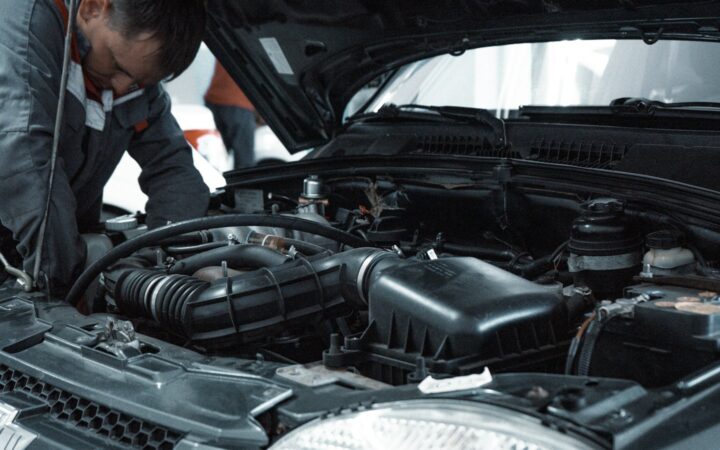

A small puddle under the car, a dipstick that reads lower than last month, or a burnt smell after a drive can all mean your engine is losing oil. Oil keeps the moving parts of the engine apart, so even a slow leak can cause serious damage if it goes unnoticed. This guide explains the common signs of an oil leak, the usual causes, what you can safely check yourself, and when to book a mechanic.
Signs your car may be leaking oil
Most leaks show up in one of a few ways:
- Drips or puddles under the car. Fresh engine oil is amber or brown and feels slippery. Check the colour and smell rather than guessing, because old, dark spots can still be oil.
- A dipstick reading that keeps dropping. If you need to top up between services, the oil is going somewhere.
- Oily grime on the engine. Look for a film of dirt around the valve cover, the sump or the underside of the bonnet.
- Smoke or a burning smell. Oil dripping onto a hot exhaust part burns off and leaves a sharp, acrid smell.
- The oil pressure warning light. This is the most urgent sign. Stop safely and switch the engine off.
Common causes of an oil leak
Most leaks come from a gasket or seal that has hardened with age and heat. Gaskets are the thin layers that seal the joints between engine parts, and seals stop oil escaping around moving shafts. The usual suspects are:
- The valve cover gasket, which sits on top of the engine and is a common source of leaks on higher-kilometre cars.
- The sump gasket or the drain plug at the base of the engine.
- The oil filter, if it has been fitted loosely or its seal has failed.
- The crankshaft or camshaft seals, which are less common but more involved to repair.
- Hoses, lines and the oil cooler, which can crack or work loose.
Only a proper inspection will show which one is responsible. Oil can run along the engine before it drips somewhere else, so the spot where it lands is not always where it starts.
What you can check safely at home
You do not need to get under the car to start looking. The NRMA recommends checking your engine oil at least once a month, and the same routine is the easiest way to catch a leak early. Park on level ground, wait a few minutes after switching the engine off, wipe the dipstick clean, reinsert it fully, then pull it out and read the level against the high and low marks. Aim for a reading nearer the high mark. If it is low, add the grade listed in your owner’s manual in small amounts, then recheck.
Next, look for a pattern. Slide a clean sheet of cardboard under the car overnight. Marks in the same spot each morning point to the source. Note where the oil lands and roughly how much you find, and take a photo of any leak. Tell your mechanic when it started and how often you top up, because that history helps narrow the cause.
Keep your hands clear of the exhaust and engine when they are hot, and never work under a car that is held up only by a jack.
When to book a mechanic
Book a check soon if you notice any of the following:
- Oil on the ground more than once, or in a new location.
- Oil that needs topping up more often than it did before.
- Any warning light, especially the oil pressure light.
- A burning smell, blue or grey smoke from the exhaust, or oil on the drive belts.
- A leak that is getting bigger, even slowly.
A small leak is not always an emergency, but it rarely gets better on its own. Gaskets and seals usually worsen with time, and a low oil level is one of the quickest ways to damage an engine.
How we diagnose an oil leak
An oil leak check starts with a look at the engine and underbody, usually on a lift so the technician can see from below. We find where the oil is coming from and explain what we found and what repairing it would involve. We call you to approve any extra work before we start it. Oil leak diagnosis sits within our engine diagnostics and repairs work, and regular oil checks are part of car servicing.
Frequently asked questions
Is a small oil leak dangerous?
It can be. Even a small leak can lower the oil level between checks, and low oil is one of the main causes of serious engine damage. Get it checked rather than waiting to see whether it gets worse.
Can I keep driving with an oil leak?
Only while the oil level stays within the range on the dipstick, no warning light is on, and you can get it checked soon. If the oil pressure light comes on, stop safely and switch the engine off.
Why does the oil only drip after the car has been parked?
Oil that has seeped onto the underside of the engine often drips once the car has been parked and the engine has cooled. Checking the same spot each morning helps identify where it is coming from.
Book your oil leak check in Kings Park
Andrew’s Mechanical is at 3 Goulburn St, Kings Park, close to Blacktown, Seven Hills, Marayong and Quakers Hill. If you are not sure whether a leak needs attention, call and describe what you have seen.